
Current work
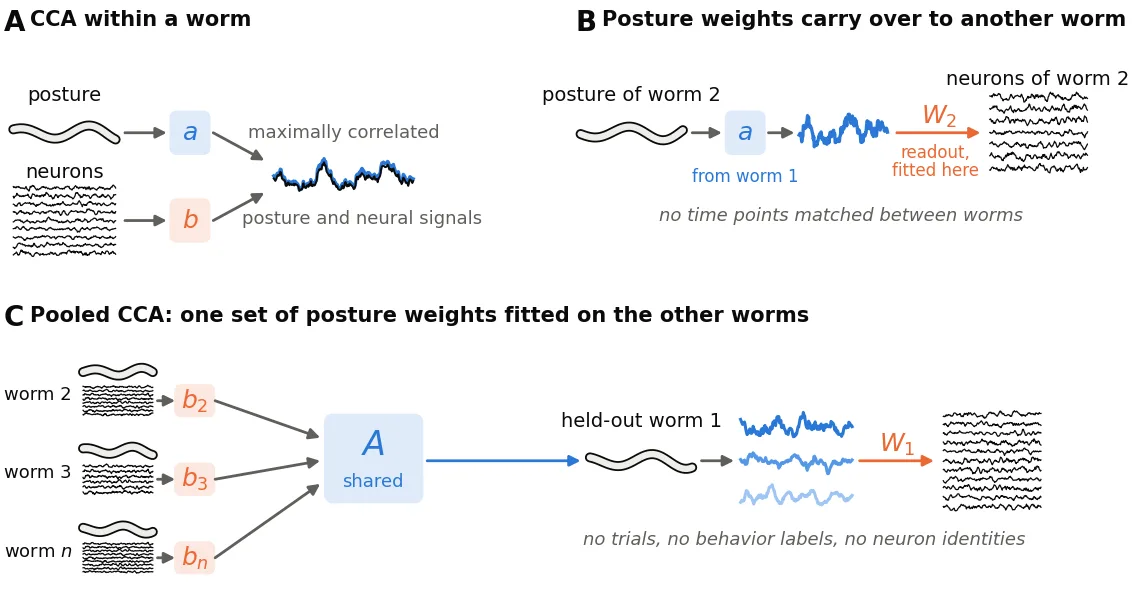
Shared neural activity across worms
Aligning the neural activity of different worms through their posture. Posture weights learned on other worms carry over to a held-out worm, with no behavior labels and no neuron identities.
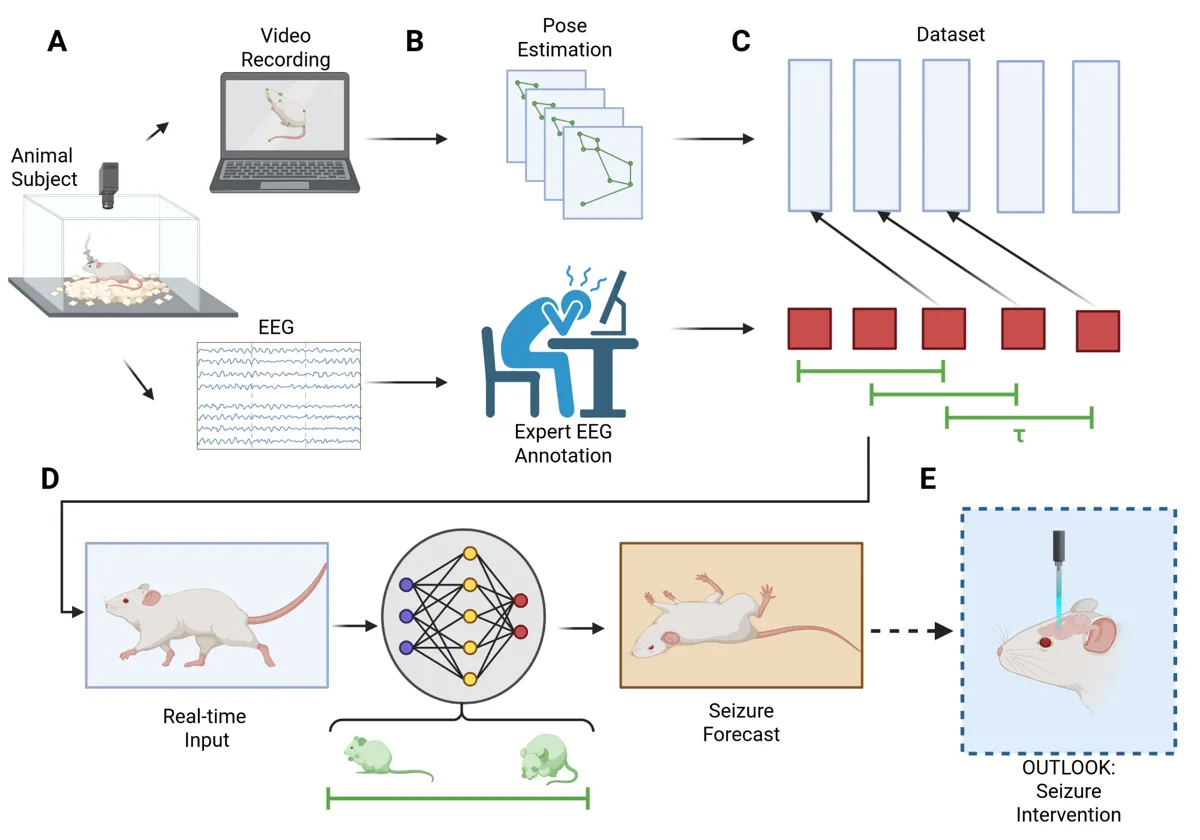
Seizure prediction from behavior
Non-invasive early detection of seizures from behavior. Video is turned into pose estimates, paired with EEG annotations, and a neural network forecasts upcoming seizures.
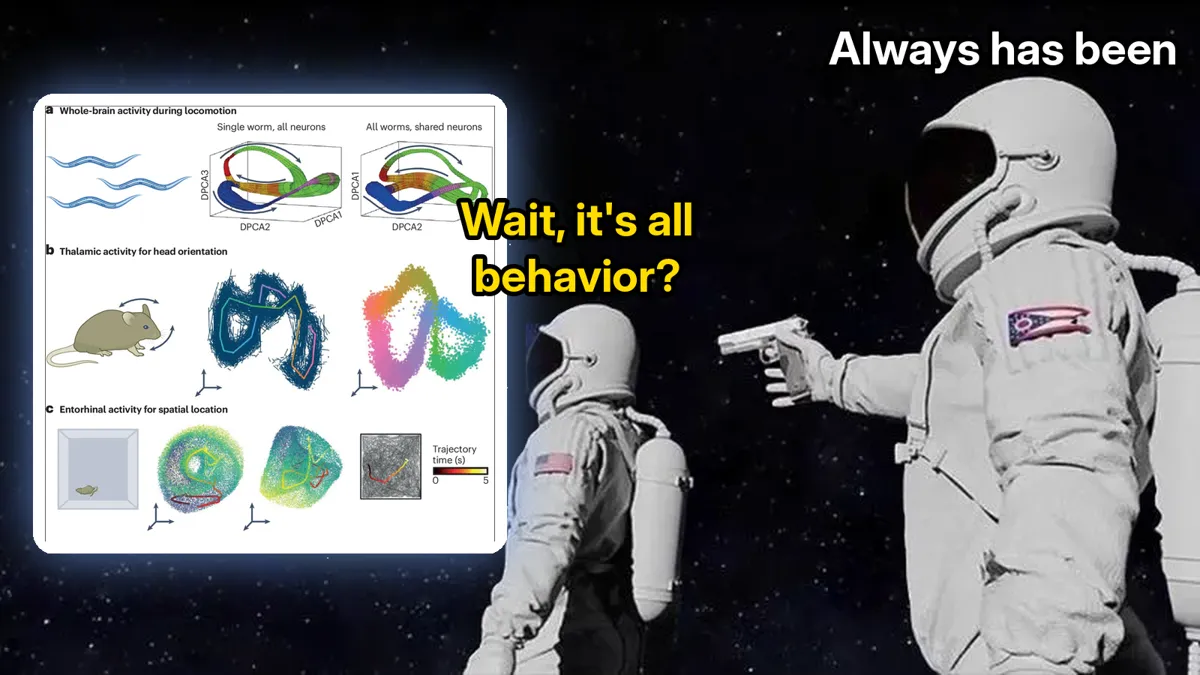
Behavioral manifolds
Many neural manifolds may simply reflect behavior. Comparing neural and behavioral manifolds across worms, monkeys and rats.
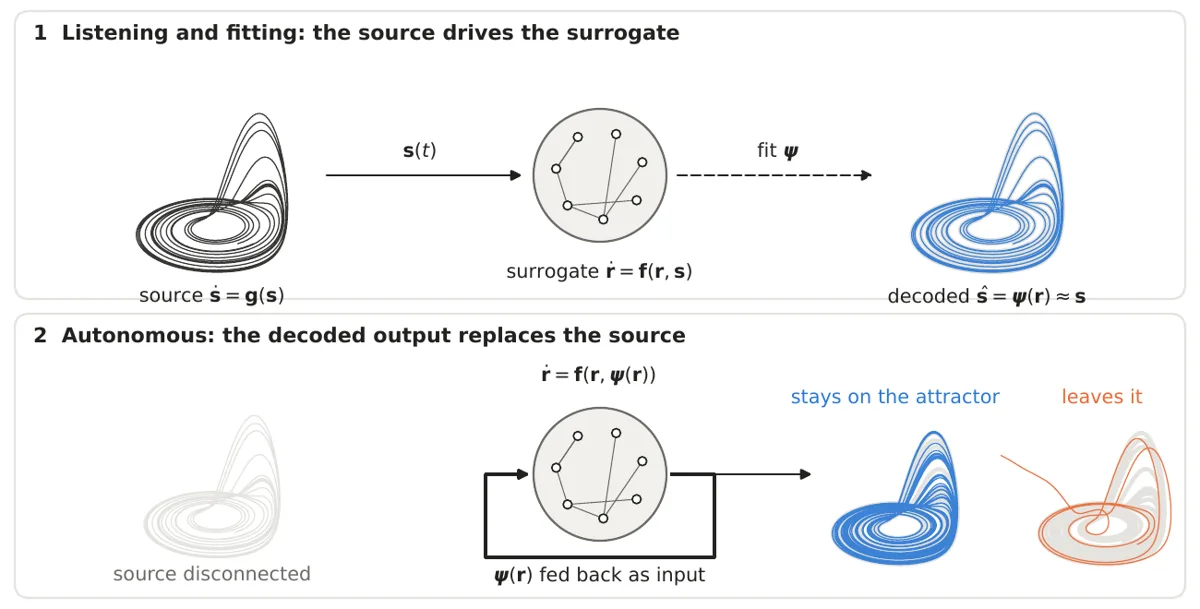
Reservoir computing and dynamical systems
Recurrent networks that learn dynamical systems. A reservoir is driven by a chaotic source, then run autonomously on its own output. Does it stay on the attractor or leave it?
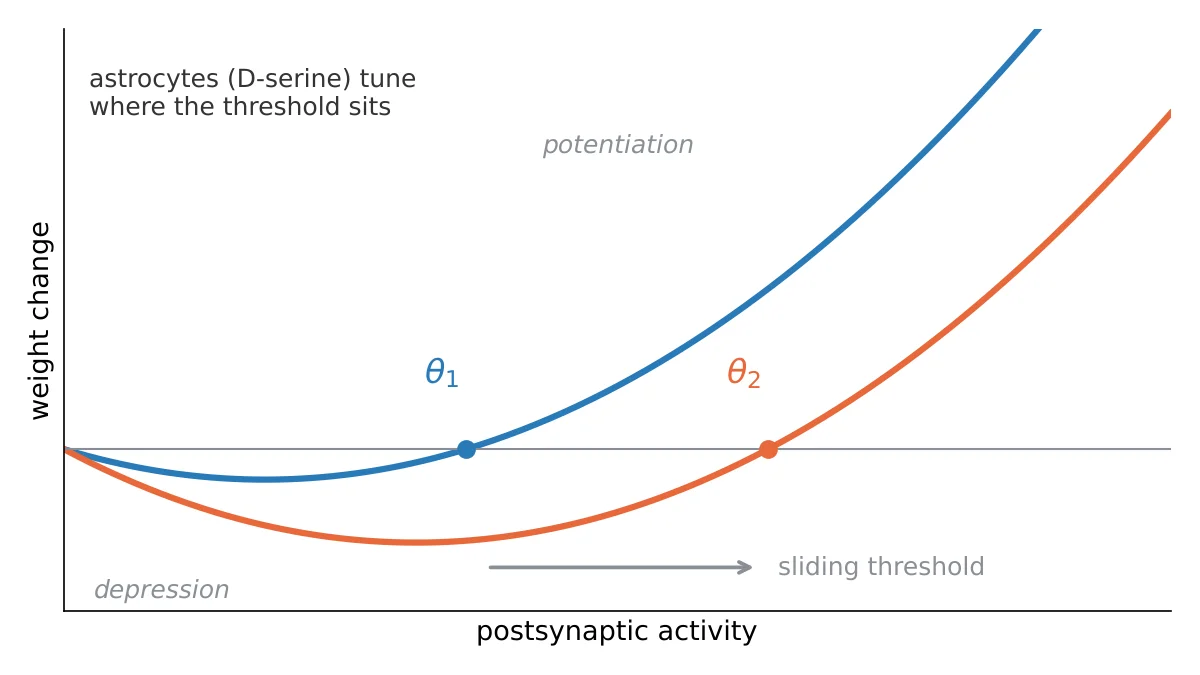
Stable learning and plasticity
Biologically plausible models of learning and plasticity, and how learning stays stable and adaptive in the presence of stochasticity, variability and environmental change.
Research themes
As a computational neuroscientist, I study how neural activity gives rise to behavior. My work is mainly theoretical, but it is closely connected to experimental data, with the goal of developing models that are both mathematically principled and biologically meaningful.
If you are interested in my research, please feel free to get in touch. The lab I am part of is often looking for motivated people at different career stages, from internships to postdoctoral positions.
Modeling Plasticity and Learning
The brain is a remarkably flexible learning system, yet the mechanisms that allow neural circuits to adapt to changing environments remain only partially understood. I develop biologically plausible models of learning and plasticity that aim to connect local synaptic rules with higher-level descriptions of behavior. My current work focuses on how learning can remain stable and adaptive in the presence of stochasticity, variability, and environmental change.
Behavior
Behavior is the main observable output of neural systems, but turning rich behavioral recordings into interpretable models remains a major challenge. I develop quantitative and phenomenological approaches to describe actions and decisions directly from observation. Current projects include the construction of behavioral manifolds that reduce high-dimensional recordings to low-dimensional representations, non-invasive methods for early seizure detection from behavior, and models of communication between agents during navigation.
Reservoir Computing
During my PhD, I worked on reservoir computing, a machine learning framework in which a fixed recurrent neural network is used to process temporal information. My research focused on the dynamical systems perspective of these models, with particular interest in how recurrent networks represent past inputs, learn temporal structure, and predict future states.